Kitchen renovations sit in a funny place for most homeowners. They matter a great deal to daily life and resale, but they also come with a tangle of decisions that can stall a project before it begins. For that reason, IKEA kitchens have become a common choice because the process is more predictable than many people expect. For households trying to balance cost, timing, and a clean, attractive result, the IKEA route removes a lot of friction.
One reason is the planning stage. IKEA’s online kitchen planner allows homeowners to build a layout in three dimensions before you buy a single cabinet. You can test widths, heights, corner solutions, and door styles, and the tool updates as you go. It’s a practical way to see whether a peninsula will fit in a walkway, whether drawers will open comfortably, or whether storage is where it should be. For anyone who prefers a bit of human reassurance, IKEA also offers free in-store and online planning appointments, and paid in-home measuring and planning for more complex spaces.
IKEA’s main customizable system in Canada is SEKTION, with standardized cabinet sizes meant to combine cleanly in different layouts, including tight condo kitchens. Because the planner generates a parts list, the ordering phase tends to be less guesswork-heavy than some custom routes. Homeowners see the full cabinet and fitting list up front, along with clear upgrade points such as door fronts, organizers, and counters, so they can decide where to spend and where to stay simple.
Installation is where IKEA kitchens often surprise people in a good way. The system is designed for straightforward assembly, which makes it approachable for capable DIYers who are willing to measure carefully and work slowly. At the same time, it doesn’t force anyone into DIY. IKEA offers installation through service partners, and many independent contractors are comfortable working with SEKTION because everything is standardized and well documented. The real make-or-break detail is preparation: walls need to be reasonably level, measurements need to be accurate, and plumbing and electrical work must be done by qualified trades. When that groundwork is solid, the cabinets go in cleanly and look good for many years.
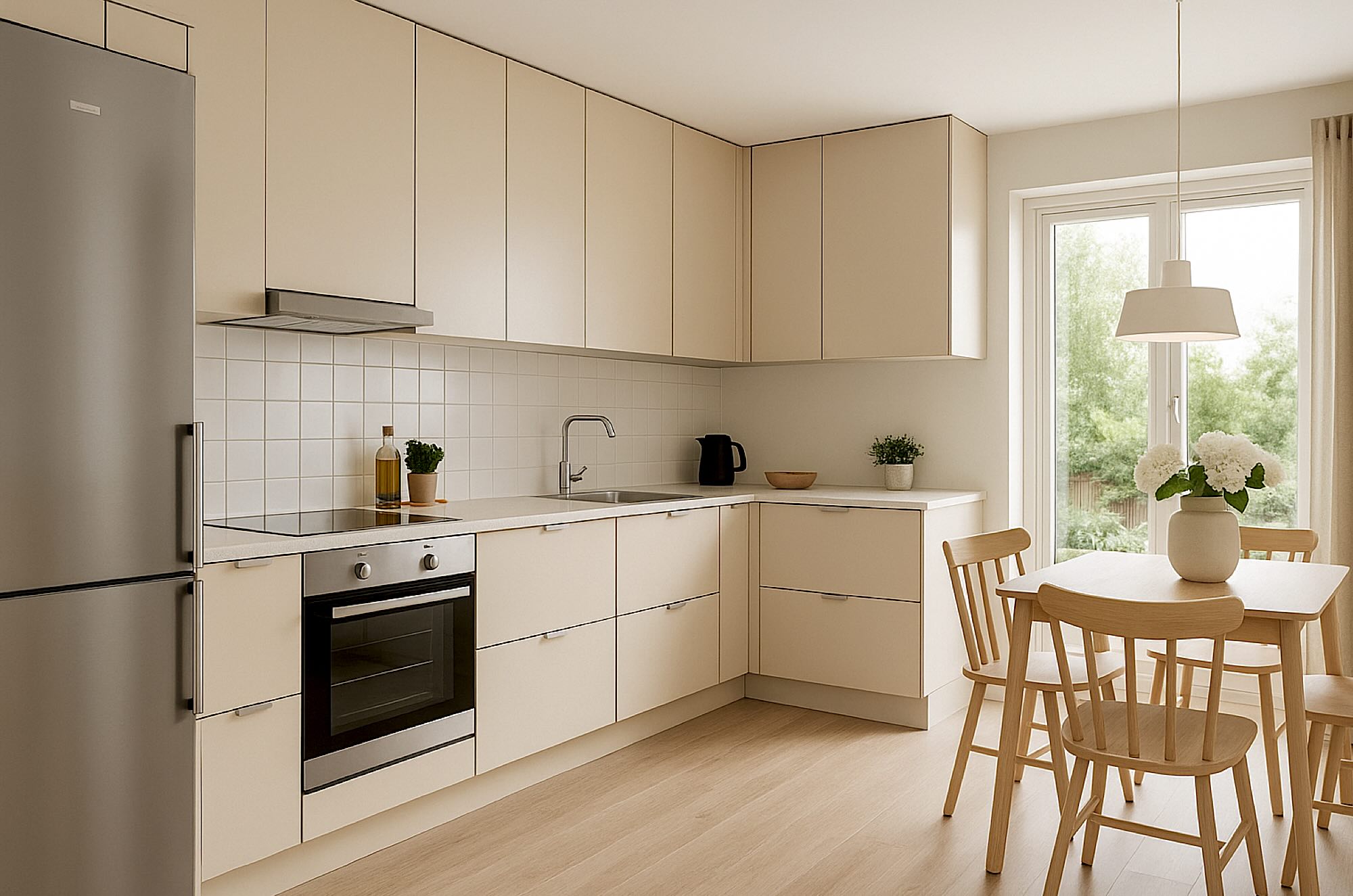
Visually, IKEA kitchens tend to land in a sweet spot for a lot of properties. Door and drawer fronts come in styles range from minimalist to country classic, which means homeowners can match the tone of the home without paying for fully custom millwork. IKEA’s drawer systems, pull-outs, recycling solutions, and pantry fittings are one of the brand’s strengths, and they improve day-to-day function in ways buyers tend to feel quickly. SEKTION cabinets also come with a 25-year limited warranty, which signals confidence in the core system and reassures buyers of the quality.
IKEA sells stylish appliances specifically intended for SEKTION kitchens. The cabinet frames for ovens, microwaves, fridges, and dishwashers are designed around those appliance dimensions, so panels and door gaps line up without awkward filler pieces. Panel-ready dishwashers are a good example: the appliance accepts a matching cabinet front, so the dishwasher disappears into the cabinetry rather than breaking the visual rhythm. For homeowners who want an integrated look, this can make a kitchen feel more settled and less “appliance-heavy.” It’s still possible to mix brands, and many people do, but sticking with IKEA appliances tends to simplify installation because the parts are made to work together.
For a large share of homeowners, IKEA offers a steady combination: a planning process that reduces uncertainty, a purchasing path that keeps budgets visible, an installation system that can be DIY or fully hired out, and a final look that feels modern. That kind of predictable, good-looking practicality is a real asset for the people cooking there now and for whoever may be admiring the kitchen in a listing photo later.