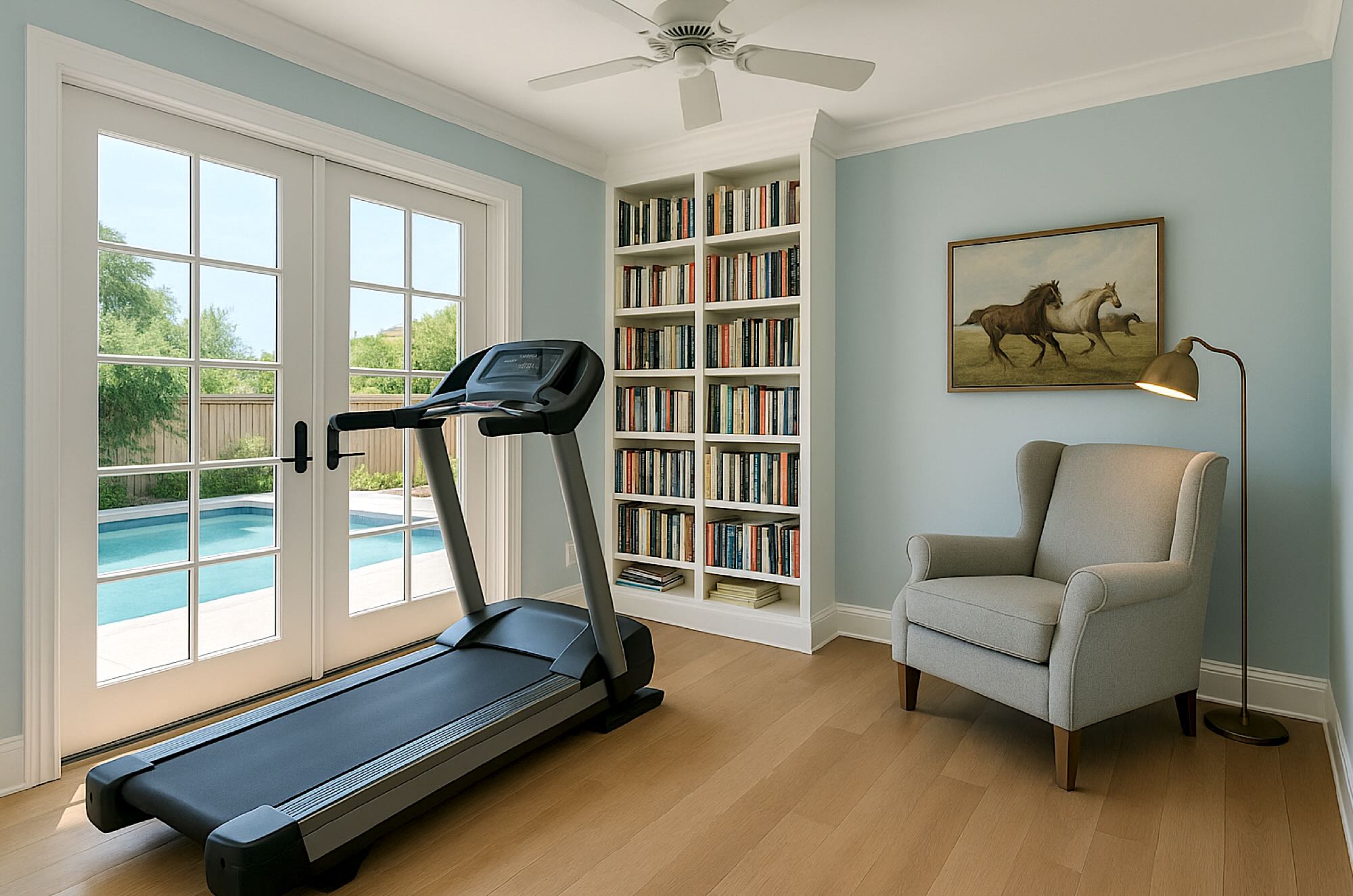
A good flex room doesn’t try to be everything at once. One week it may host a visiting friend or adult child. Some days it might be an office. Some evenings it could be a place to stretch, lift a few weights, or sit with a book when the rest of the house is busy. The point is a room that can support the rhythms of real life without constant rearranging.
The first step is to choose a primary identity for the room, even if that identity changes by season. In most homes, the space serves daily work or daily living first, because those needs are constant. Guests arrive occasionally, and wellness routines tend to happen in short, regular windows. When the room is anchored by one main function, it is easier to keep tidy and appealing, and to shift the secondary functions in and out as needed.
Furniture does most of the work in a flexible room, so it helps to think in pieces that earn their footprint. In smaller homes and condos, a daybed or a sofa bed can hold the guest function without forcing the entire room to live like a hotel. For work, a desk that feels pleasant enough to use daily matters more than a clever fold-out that is never comfortable. A simple rule is that any large item should serve at least two purposes: sleep and seating, work and storage, exercise and calm.
Storage makes the difference between a flex room that works and one that becomes a clutter magnet. When a room shifts roles, its supporting items need a dignified place to live. Closed storage is especially helpful for resale, because it lets the space photograph as calm and easy. Open shelving can be useful, but it benefits from restraint: a few books, a plant, perhaps a basket or two for items that need to be accessed often.
The arrangement of the room matters as much as the pieces in it. A flex room feels more coherent when it is laid out in zones, even if the zones are small. One corner can hold the desk and task lighting. Another can hold the sleeper sofa or bed. A third, if space allows, can hold a mat, a small weight rack, or a comfortable chair. This gives the room a clear logic so that switching activities can happen without rearranging everything.
Work needs focused, adjustable light that reduces eye strain during darker months. Guests and wellness routines benefit from softer, warmer layers of light that help the body unwind. A ceiling fixture alone rarely does all of that. A desk lamp plus a floor lamp or wall sconce can shift the mood without changing anything else. Window treatments play a role too. Sheer curtains keep a room bright and open during the day, while a heavier panel gives guests privacy at night.
For homeowners thinking about long-term livability, a flex room can future-proof a house. It may become a caregiver’s resting space, a hobby studio, or a main-floor bedroom if stairs ever feel less friendly. For buyers, the value lies in possibility.