Many condo owners share a small frustration that architects do not always account for: the front door that opens directly into the living space. There is no hallway, no pause, no transition. One moment you are in the elevator or corridor; the next, you are standing in the heart of the home with shoes, grocery bags, and outdoor noise spilling in together. It can feel exposed and a little abrupt.
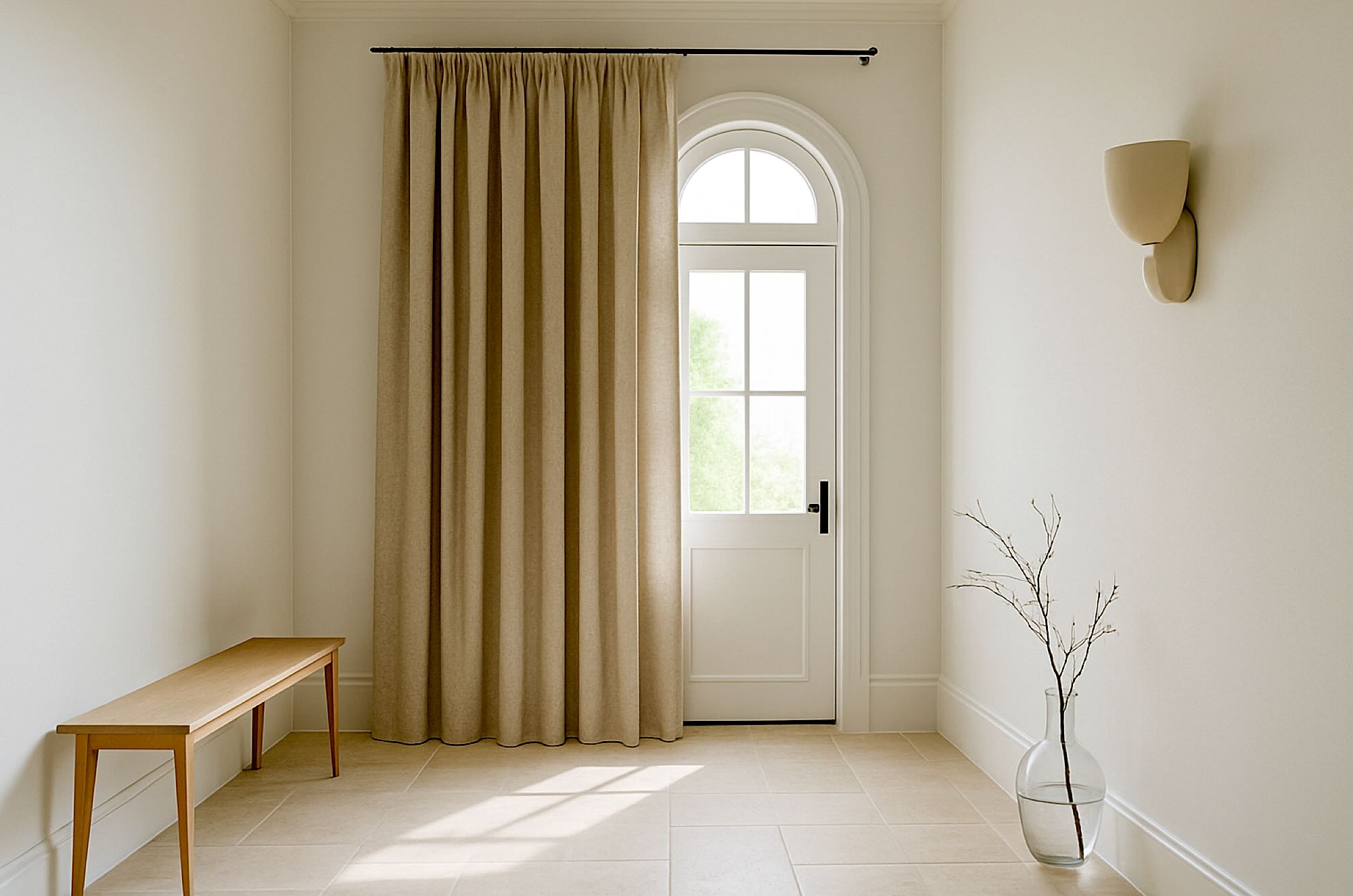
A simple, traditional solution is returning to favour: the portière. This is a fabric curtain installed over a doorway to soften the boundary between spaces. In a condo, a portière in front of the entry door can provide a sense of arrival, help with drafts and cooking odours, and introduce warmth and texture without any structural change. It is a modest gesture with surprisingly large psychological and practical effects.
Before anything else, it is important to remember that safety and practicality come first. The door still needs to swing freely and remain easy to open in an emergency, and building rules must be respected. A well-designed portière does not interfere with the door or latch. It sits slightly inside the living space, on its own rod or track, and slides aside smoothly when you come and go. Think of it as a soft, movable wall.
The visual impact is often the first thing people notice. Instead of looking straight at the metal of the entry door, you see fabric: perhaps a linen in a soft oat colour, or a cotton blend in a gentle botanical pattern, or even a velvet if you enjoy a more traditional, cocooning feel. The texture catches the light; the folds introduce a sense of depth. Suddenly the area near the door reads less like a small, intentional entry zone and more like a room decoration. This can be a pleasant feeling, and it can also make a difference in photographs if you are preparing to list the property. A calmer backdrop usually feels more inviting than a visible door and a tangle of coats.
In a small condo, the portière will be in your line of sight every day, so it should harmonize with your existing palette. A curtain in the same family as your sofa or rug can tie the space together and prevent visual chaos. Some people prefer a solid, calm colour that recedes; others enjoy a subtle pattern that adds character without overwhelming. Either approach can work as long as it supports the atmosphere you want rather than competing with it. You’ll have it for a long time so choose a quality fabric that you love.
If you are renting, a simple tension rod mounted above the door on the living-room side is sufficient. If you can alter the space, a ceiling-mounted track will allow the curtain to glide open and closed more smoothly. Swinging rods designed for portières are a common choice. Whatever method you choose, measure carefully so that the curtain just brushes the floor without dragging. This creates a polished look and avoids collecting dust.
When the curtain is drawn, it adds a layer of privacy. If you are seated in the living area and someone passes in the hallway, you no longer feel quite so exposed because it forms a psychological buffer between the public and private spaces. In a time when many of us are thinking carefully about how to make compact homes feel more nurturing, that sense of threshold matters. It really works.
From a real estate perspective, the portière is an easy feature to remove or adapt if a future buyer prefers a different approach. It does not alter the door, hardware, or walls in any permanent way if installed thoughtfully. Yet during showings, it can quietly communicate that the owner has cared about comfort, sound, and privacy, all of which are increasingly important to urban buyers and down-sizers. It suggests that the condo is not merely a box, but a home that has been lived in with intention.
In the larger picture, this sort of change reflects a broader movement toward making small, reversible improvements rather than large, resource-heavy renovations. A curtain, a rod, a few thoughtful decisions about fabric and placement: these are modest steps, but they can bring genuine warmth to a space that once felt exposed and impersonal. If your front door currently opens straight into your living room, a portière may be worth considering. It is a an easy way to reclaim comfort and peace of mind.